ACTING TOGETHER
  • Home
  • Documentary
  • Video Shorts
  • Training Resources
  • ARTISTS & AUTHORS
    • All
    • Aida Nasrallah
    • Catherine Filloux
    • Charles Mulekwa
    • Daniel Banks
    • DIJANA MILOŠEVIĆ
    • Eugene van Erven
    • Jo Salas
    • John O'Neal
    • Kate Gardner
    • Lee Perlman
    • Mads Palihapitiya
    • MaryAnn Hunter
    • Polly Walker
    • Roberta Levitow
    • Roberto Varea
    • Ruth Margraff
  • Library
  • About
  • Contact & comment
  • STORE
  • ANNIVERSARY
  • Home
  • Documentary
  • Video Shorts
  • Training Resources
  • ARTISTS & AUTHORS
    • All
    • Aida Nasrallah
    • Catherine Filloux
    • Charles Mulekwa
    • Daniel Banks
    • DIJANA MILOŠEVIĆ
    • Eugene van Erven
    • Jo Salas
    • John O'Neal
    • Kate Gardner
    • Lee Perlman
    • Mads Palihapitiya
    • MaryAnn Hunter
    • Polly Walker
    • Roberta Levitow
    • Roberto Varea
    • Ruth Margraff
  • Library
  • About
  • Contact & comment
  • STORE
  • ANNIVERSARY

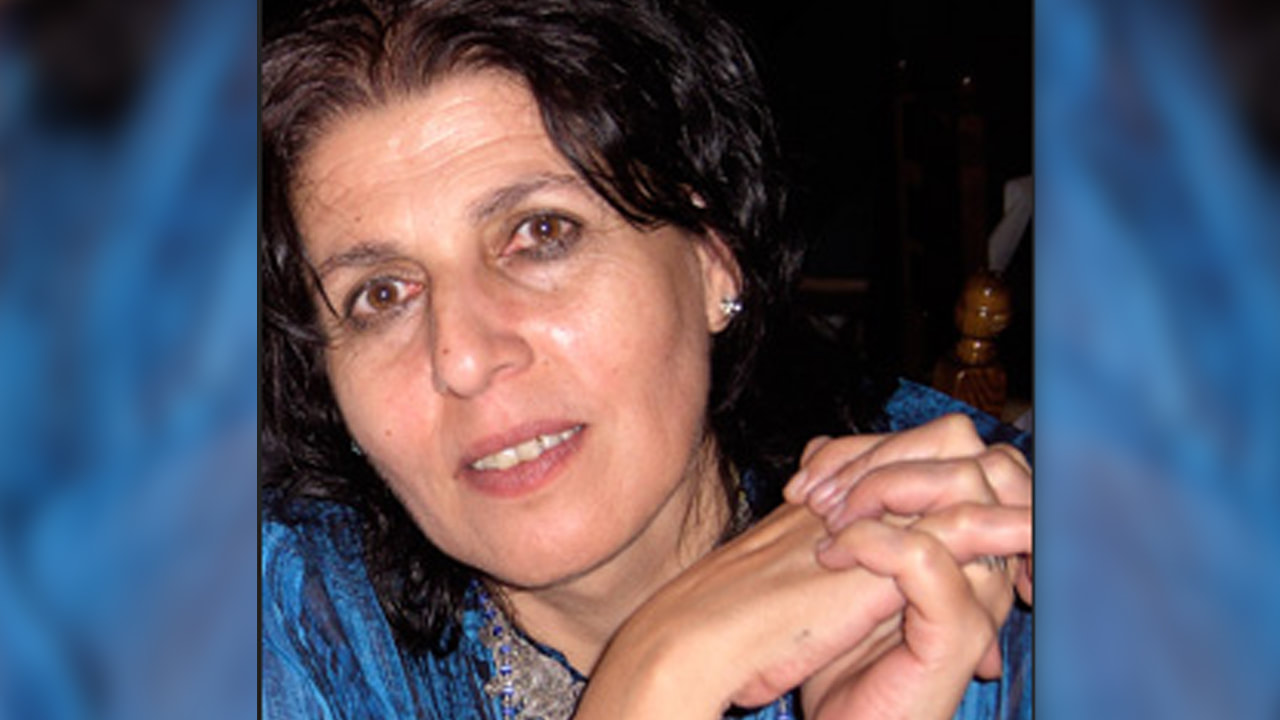
AIDA NASRALLAH ​


Picture
WEAVING DIALOGUES & CONFRONTING HARSH REALITIES
Engendering Social Change in Israel Through Performance
 

To tell about peacebuilding performance in Israel, Palestinian Israeli playwright Aida Nasrallah and Jewish Israeli theatre scholar Lee Perlman weave their own interpersonal dialogue. Throughout their discussion of theatre institutions and their historical and political context, Nasrallah and Perlman tell their story of coming to know each other. The process is halting, across national, cultural, and linguistic differences and suspicions bred from sixty years of conflict. The relationship they eventually develop is not one of perfect understanding or agreement, but relies on the foundation of respect and trust they build over time.​

Picture
BIOGRAPHY
Picture
CHAPTER SUMMARY
Picture
LINKS & RESOURCES


BIOGRAPHY

Aida Nasrallah is the pen name of Mahagna Nassra, a Palestinian-Israeli writer, poet, performance artist, art historian and critic, and lecturer at Beit Berl University. Her work focuses on women’s roles as peacebuilders. She organizes and runs a weekly salon for women poets and writers, serving as mentor for Arab women in Israel who wish to experiment with poetry and fiction. She was the driving force behind “Common Threads,” an art exhibit that displayed the work of Jewish and Arab women artists side by side at the prestigious gallery of the Tel Aviv University. 

Ms. Nasrallah received a B.A. in Arabic and Art, University of Haifa, and her M.A. Degree through the International Writing Program at the University of Iowa. Her thesis was entitled “Female Artists from the Wadi Ara Region: Their Artistic Endeavor as a Reflection of their Social and Individual Perception.”  In 2012 Nasrallah received her doctorate from Tel Aviv University for her dissertation “The Representation of the Female Body in the Performances and Art of Palestinian Women in Israel from 1998 to 2010.” 

She has published over 40 short stories and 60 poems in various Arabic publications in Israel. Her novel My Dear Beyond the Ocean was recently published in German.  Her play, The Moaning of Rosary was produced as a reading by Portland Stage Company and the theatre department at Iowa University in 2001 and was later staged at New York Theatre Workshop the same year. She has given lectures on topics such as women’s roles in art and society, peace making, Arabic culture, and using the arts in teaching. Nasrallah taught a special course called “Acting Together” at the High School for the Arts in Naamat. The main content for this course was the Acting Together anthology.

Nasrallah is also finishing two new plays in Arabic, both of which explore the topic of conflict, and the idea that all nations suffer in a state of war. One of the plays is “ALDAFIRA: Plead under Pressure” and the second is “I Will Flee the Fire with My Hands.” Her work will be included in the “Anthology for Contemporary Palestinian Poets.”


Events:

California Conference on Politics and Education, with lecturers from Beit Berl College in Germany
University of La Verne (est. Lordsburg College),

Art Wokshop Beit Berl College, Isreal 

Interviews, News and Articles:

  • “The Rituals of Women,” “Soul Playing,” “The She-Barefooted,” and “A Hymn without a Rhythm.” Published in “The Story of a People: An Anthology of Palestinian Poets Within the Green-Lines.” Translated and edited by Jamal Assadi, Lang Publishing: New York, Washington: DC, Baltimore, Bern, Frankfort, Berlin: Brussels, Vienna, Oxford
 
  • “Israeli Arabs Speak: The Closed, Locked Body Speaks.” Eretz Acheret Journal about Israel and Judaism. October 3, 2011. 
 
  • “From Victim to the Saviour.” Published in “Raeda Saadeh, Reframing Palestine.” Ed. Rose Issa. London: Beyond Art Productions and Rose Issa Projects, 54-55.
 
  • “Ahmad Canaan: The Dreamer Knight.” Review for artist Ahmad Canaan. 
 
  • Nasrallah, A. “Under the Shadow.” A dialogue play manuscript. ​

Anthology Vol. 1: Chapter 6 Summary
WEAVING DIALOGUES AND CONFRONTING HARSH REALITIES:
Engendering Social Change in Israel through Performance

In this chapter, Palestinian Israeli Playwright Aida Nasrallah and Jewish Israeli theatre
scholar Lee Perlman present examples of theatre institutions that are contributing to
peacebuilding in Israel. They highlight the Arab-Hebrew Theatre in Jaffa, which has been
producing bi-national as well as uni-national plays since 1991.
​
Throughout their discussion of such institutions and their explanation of the historical and
political context in which they operate, Nasrallah and Perlman weave their own interpersonal
dialogue, a story of two individuals who come to know each other, haltingly,
across national, cultural, and linguistic differences and suspicions bred from sixty years
of conflict. The authors’ discussion of theatre organizations contributing to peacebuilding
in Israel is thus interspersed with and underscored by their rendering of their own
relationship—as a Palestinian woman and artist and a Jewish man and academic. They
compose their own process of getting to know each other into a small drama, highlighting
the different perspectives they each brought to their meeting, the hesitations and mistrust
they felt in the early stages, and the relationship they eventually develop not through
perfect understanding or agreement, but through a building over time of respect and trust.

Context
This chapter focuses primarily on relations between Jewish and Palestinian citizens of
Israel, as opposed to relations between Israelis and the Palestinians living in the Israeli occupied
West Bank and Gaza Strip. Nasrallah and Perlman describe Jewish and
Palestinian Israelis as “two national groups living within the same borders.” They explain
that after the 1948 war that resulted in the creation of the state of Israel:
Palestinians who had remained inside the borders of Israel were “granted,” or, as
many felt, “compelled” to receive Israeli citizenship, while their brothers, sisters,
cousins, and parents remained refugees in neighboring Lebanon, Egypt, Jordan,
and elsewhere…. The Palestinian citizens of Israel began the complex process of
becoming citizens of a state whose language, symbols and narrative were alien,
and the founding of which had utterly disrupted their lives, communities and body
politic.

Since 1948, the Palestinian citizens of Israel have faced perpetual discrimination in many
domains of public life, including “land allocation, housing rights, and education.” In
addition, they have faced suspicion from the majority Jewish community, many of whom
question their loyalty to the state.

The Israeli theatre has traditionally been dominated by Jewish performers, directors,
producers, and writers. It wasn’t until the 1970s that the country began to see fully
realized Palestinian characters on stage and that themes relevant to Palestinians began to
be addressed. While there have been, since that time, a number of institutions, programs,
and productions bringing Palestinian voices to the stage and openly addressing issues of
peace and justice in Israel and Palestine, the tension, segregation, and imbalance of power
between the two communities makes cooperative theatre efforts challenging.

It has been particularly difficult since the start of the Al-Aksa Intifada in 2000, when relations
between the two communities began to deteriorate. As Nasrallah and Perlman put it:
The larger social context in which these theatre groups operate is not one that
promotes and nurtures cooperation…Artists who choose to confront and
humanize Palestinian-Jewish relations within Israel face difficult questions not
only about the subject matter they’re taking on but also about the types of
partnerships and organizational relationships they forge.

Indeed, a major challenge for joint Palestinian-Jewish efforts in Israel is figuring out how
to create organizations and programs across cultural and political differences, and across
a significant power imbalance, without inadvertently perpetuating the status quo.

The Arab-Hebrew Theatre of Jaffa
The Arab-Hebrew Theatre of Jaffa, founded in 1991, houses two troupes—one Hebrew language
and Jewish, the other Arabic-language and Palestinian. The two troupes produce separate
performances, as well as joint, bi-lingual performances. The theatre also hosts community
​dialogues and programs.

Before 1948, when many Palestinians were forced to leave their land, Jaffa was 86%
Palestinian and a major center of Palestinian cultural life. Today, Palestinians are only
34% of the city’s population, and the cultural prominence of the community has been
lost. Jewish and Palestinian residents of the city live in close proximity but do not have
many opportunities to break through the barriers erected by a painful past.

In this context, say Nasrallah and Perlman:
…the Arab-Hebrew Theater’s goal is two-fold: to provide a space in which
Palestinian culture and perspectives, as well as the Arabic language, once again
have prominence in Jaffa and to provide a forum for ongoing Arab-Jewish
cooperation. The theatre’s organizational structure—two independent troupes
within a shared theatre—reflects this dual mission along with the troupes’ core
belief in the need for both partnership and autonomous Palestinian and Jewish
theatrical expression. The two troupes share a commitment to making work that
both meets high aesthetic standards and has social and political relevance.

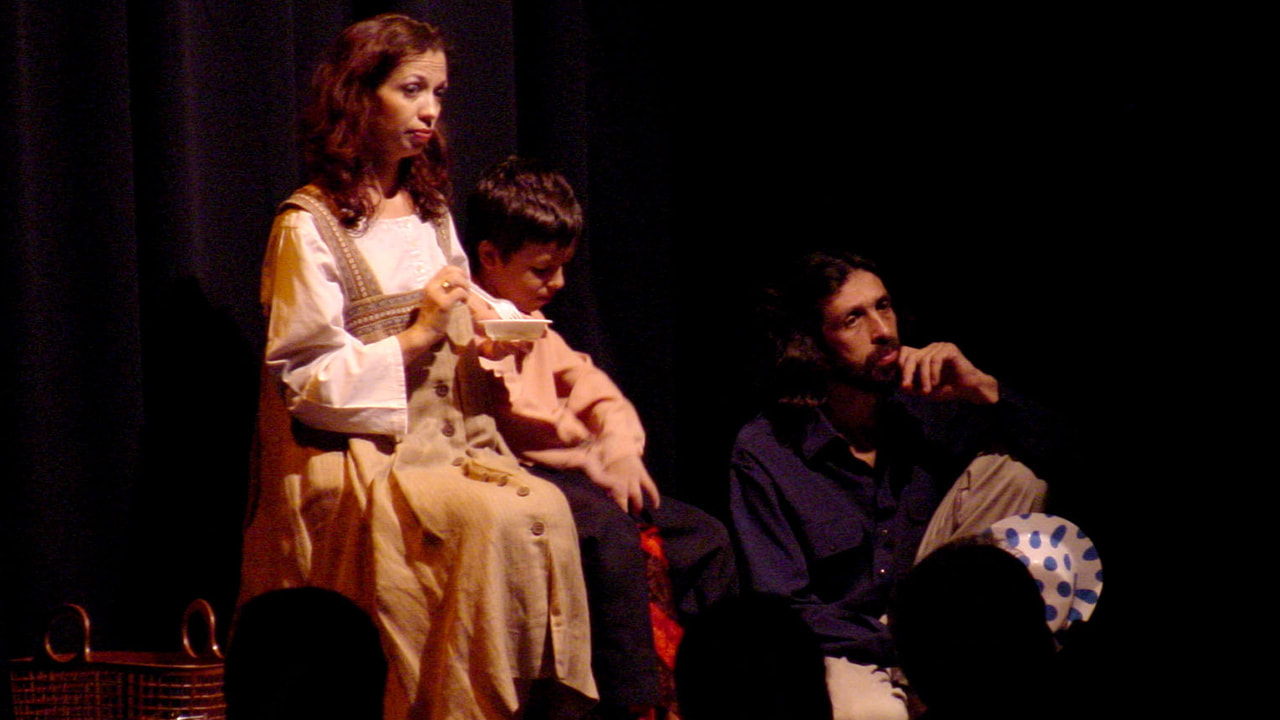
Nasrallah and Perlman describe several bi-national productions of the Arab-Hebrew
Theatre, including In the Shadow of a Violent Past – Docudrama: The Truth and
Reconciliation Committee, which debuted in 2000. This play brought together Jewish and
Palestinian Israelis, as well as Palestinians from the occupied territories, to perform an
imagined truth and reconciliation committee (TRC), modeled after real committees like
the one that took place in post-Apartheid South Africa. A combination of professional
actors and non-actors portraying themselves came together on stage to give testimonies of
crimes committed in the occupied territories. “The performance invited audiences to
confront the injustices of the Israeli occupation,” say Nasrallah and Perlman. They
continue:

One of the goals of the production was to help Israeli Jews, many of whom aren’t
exposed to sympathetic Palestinian stories in the mainstream media, to identify
and empathize with the “other.” Another goal was to shift public opinion towards
ending the occupation, as audiences, Jewish and Palestinian alike, were reminded
of its horrors. The initiators also sought to create a model of what a Palestinian-
Israeli TRC might in fact look like, once the conditions for its establishment were
ripe. The authors also describe the play Longing or Exile at Home, first performed in 2001.
Through six different narratives—including those of a Jew who immigrated to Israel to
escape danger in Cairo and of a Palestinian whose grandfather was displaced from his
village in Northern Israel—the play presents exile (whether cultural, national, or
psychological) as a common thread between many Israelis of different backgrounds.

Building Peace
The productions of the Arab-Hebrew Theatre contribute to peace by helping Jewish and
Palestinian Israelis to grapple with difficult truths, to see the humanity of the “other,” and
to acknowledge their own responsibility in the conflict. For example, Longing invites
audiences to empathize with each of its characters, and In the Shadow of a Violent Past
“put[s] the audience in the role of being the accuser and the accused.”

The work of empathizing and of taking responsibility is extremely difficult for many
audiences—but profoundly important. The plays provide “safe spaces” in which people
can do this difficult work: acknowledge the legitimacy of the narratives of the “other”
and think critically about their own role in perpetuating the status quo. The dialogue that
the authors weave into the form and content of the essay enables the authors to reflect
deeply and personally on the role that active listening must play in the creation of theaters
where art and peacebuilding can coexist.

More from “Weaving Relationships, Embroidering Dialogues”:

• In “Weaving Relationships, Embroidering Dialogues,” Nasrallah and Perlman go
into greater depth about the work of the Arab-Hebrew Theatre, elaborating on
several of the theatre’s productions, and highlighting the voices of the theatre’s
co-founders.

• The authors also provide more in-depth discussion of the historical and political
context of the conflicts between Jewish and Palestinian citizens of Israel.

• They also discuss several other groups in Israel whose work has contributed to
peace, including Peace Child, which brings Palestinian and Jewish Israeli school
children together to create and perform plays based on their life experiences 
as playwrights, directors, actors, and audiences.

Narallah and Perlman LINKS & RESOURCES

But Abu Ibrahim, We’re Family! is a series of case studies, describing collaborations between Jewish
​
and Palestinian professional theater artists in Israel, written by Lee Perlman.


The Arab-Hebrew Theatre of Jaffa:

Ben Zvi, Linda (Editor), Theater in Israel, The University of Michigan Press, 1996.

Halabi, Rabah (Editor), Israeli and Palestinian Identities in Dialogue: The School for Peace Approach, Rutgers University Press, 2004.

Journal of Social Issues: Arab-Jewish Coexistence Programs, Issue Editors - Rachel Hertz-Lazarowitz, Tamar Zelniker, Cookie White Stephan, and Walter G. Stephan, Volume 60 Number 2 2004.

Levy, Shimon, Arabs on the Hebrew Stage (unpublished article), 2007.

Rabinowitz, Dan & Abu-Baker Khawla, Coffins on our Shoulders: The Experience of the Palestinian Citizens of Israel, University of California Press, 2005.

Rokem Freddie, Performing History: Theatrical Representations of the Past in Contemporary Theatre, University of Iowa Press, 2000.

Urian Dan, The Arab in Israeli Drama and Theatre (Translated by Naomi Paz), Inwood Academic Publishers, 1997. Weiner, Eugene, The Handbook of Interethnic Coexistence, The Continuum Publishing Company, 2000.


Websites of national organizations:

The Abraham Fund Initiatives - Advancing Coexistence and Equality Among Jews and Arabs in Israel Adalah - The Legal Center for Arab Minority Rights in Israel

The Arab Center for Alterative Planning

Mossawa Center - The Advocacy Center for Arab Citizens in Israel

Shatil - The New Israel Fund's Empowerment and Training Center for Social Change Organizations in Israel

Sikkuy - The Association for the Advancement of Civic Equality in Israel

Adalah - The Legal Center for Arab Minority Rights in Israel

Picture